Motivations

The gravitational interaction plays a prevalent role in the physics of the macroscopic scale until the scale of the universe. It is well described by the general theory of relativity but significant questions remain however open.

An essential prediction of general relativity is the existence of the gravitational waves propagating like the electromagnetic waves at the speed of the light. This radiation was highlighted in an indirect way by timing of binary pulsars, but it was not observed yet directly. The direct observation of the gravitational radiation is the objective of the large Franco-Italian interferometer Virgo in construction near Pisa. In addition to its great scientific interest, this direct observation would open a new window for astrophysical observation. Future interferometers even larger, orbiting around the Earth or even around the Sun, would allow to detect the gravitational radiation at lower frequencies (Lisa project).

General relativity is a purely classical theory which presents particular difficulties with respect to quantification. One does not have yet at the present time a quantum theory of gravitation. So many questions are still badly understood at the interface between gravitation and other fundamental interactions, dominant in the microscopic field. Moreover, all the attempts at theoretical unification which are very actively developed lead to modifications of the theory of gravitation. Those often introduce apparent violations of the principle of equivalence which is the base of the general theory of relativity. These violations could become manifest in experimental tests with a degree of accuracy better than that which is currently shown. Their study is the objective of several projects of test of the principle of equivalence in space (Microscope project).

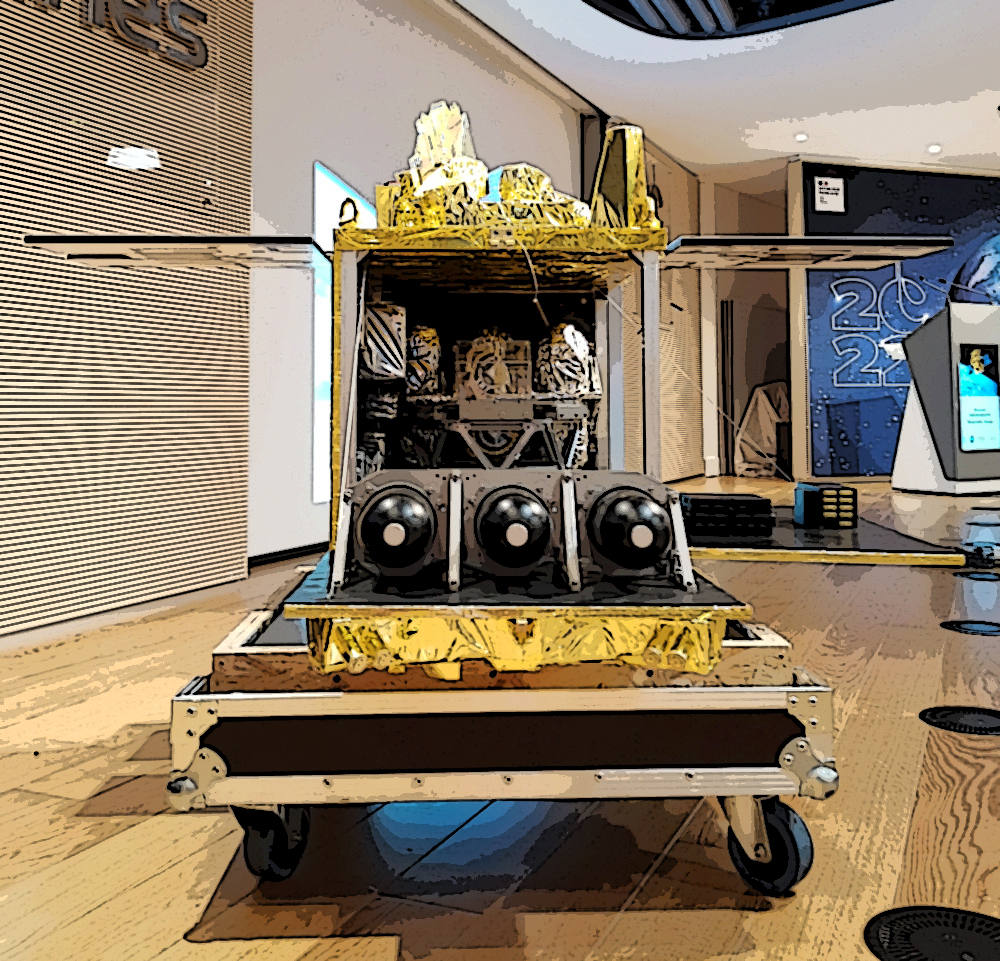
Since Newton, the physics of the gravitation has a special relationship with space. Today Laser-Lunar Ranging leads to extremely fine tests of the theory of gravitation. Moreover, space techniques now make it possible to propose new experiments allowing to check the laws of gravitation with the best possible precision and on various scales of distance. The absence of terrestrial seismic noise and the quasi weightlessness which characterize the space environment make of it a laboratory privileged for such a program. This is true for the projects of detection of gravitational wave and of test of the equivalence principle like for the project of test of relativity general founded on cold atom clocks (Aces project).

Although it is the oldest of fundamental constants of physics, the gravitational constant G is also that which is measured with the worse precision. The metrology of masses also raises problems, in particular with regard to the connection between macro and microscopic masses. A consequence is that the standard of mass remains defined by a particular physical object whereas the standard of time is defined by the frequency of an atomic transition. The second definition is more universal since it is related to fundamental constants of physics. Optical spectroscopy should make it possible to measure masses in unit of frequency and thus to contribute to solve this problem. Cold atoms allow to build up ultrastable clocks and potentially ultrasensitive accelerometers and gyrometers (Hyper project).

General relativity being a fundamental theory without any free parameter, any discriminating test leading to a deviation would have a considerable impact, in particular in astrophysics and cosmology. In contrast, any confirmation with a better degree of accuracy comes to consolidate one of the pillars of fundamental physics and constrain the numerous alternative models.

All these experiments show the common characteristic to seek to measure extremely small effects, that could be induced by the gravitational waves or by possible violations of general relativity. They call upon the most advanced technologies, critical technologies being often similar in several experiments. The problems of simulation, of noise control, data processing often have aspects common to several experiments.

The theory plays also a significant and unifying role because the analysis of the results, the interpretation of their significance and their relation to the theory pose problems specific to the domain of gravitation.